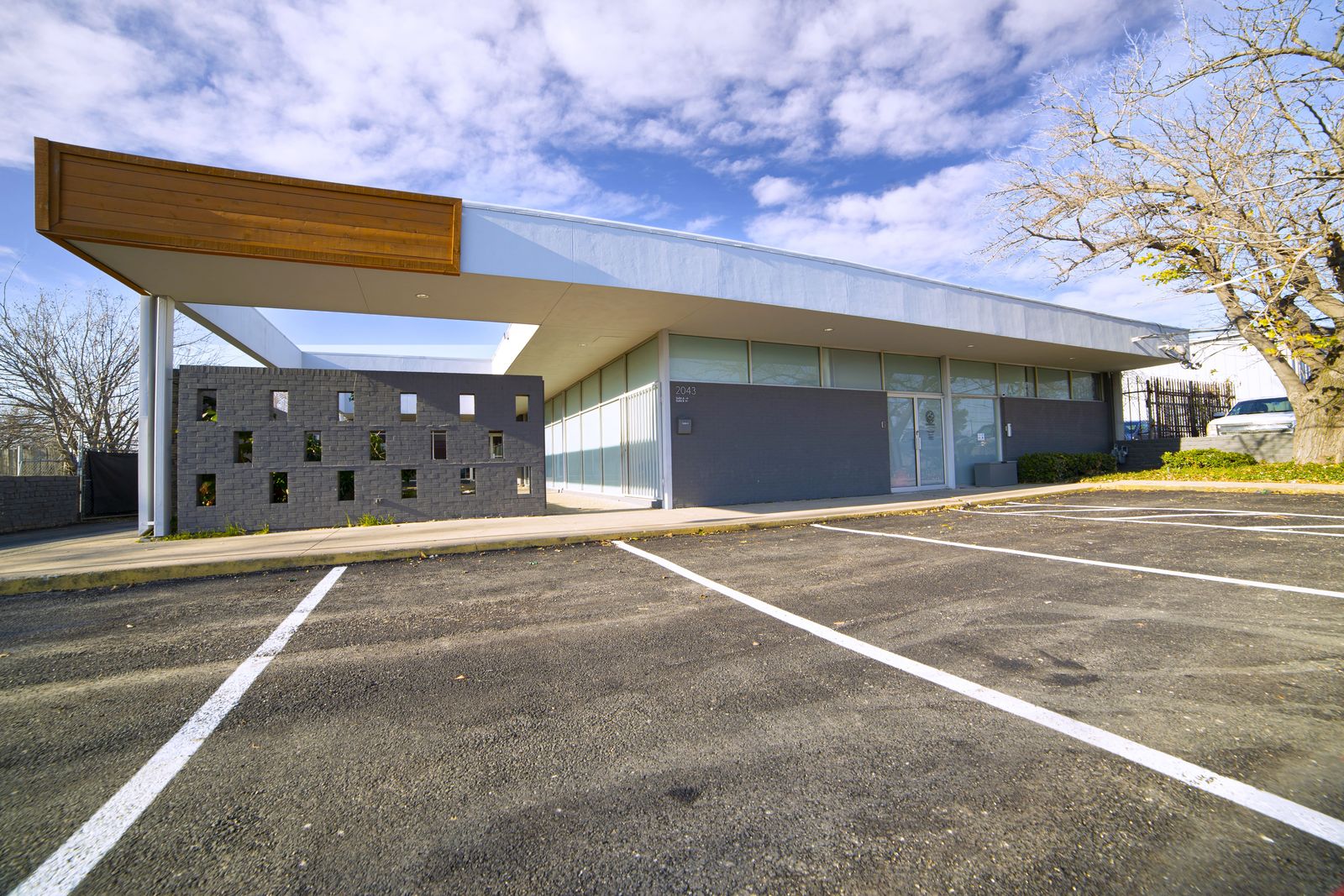
A Building With a Past
Long before it was home to tattoo artists, golf club builders, a 3D printing shop and film freelancers, 2043 Empire Central was a darkroom.
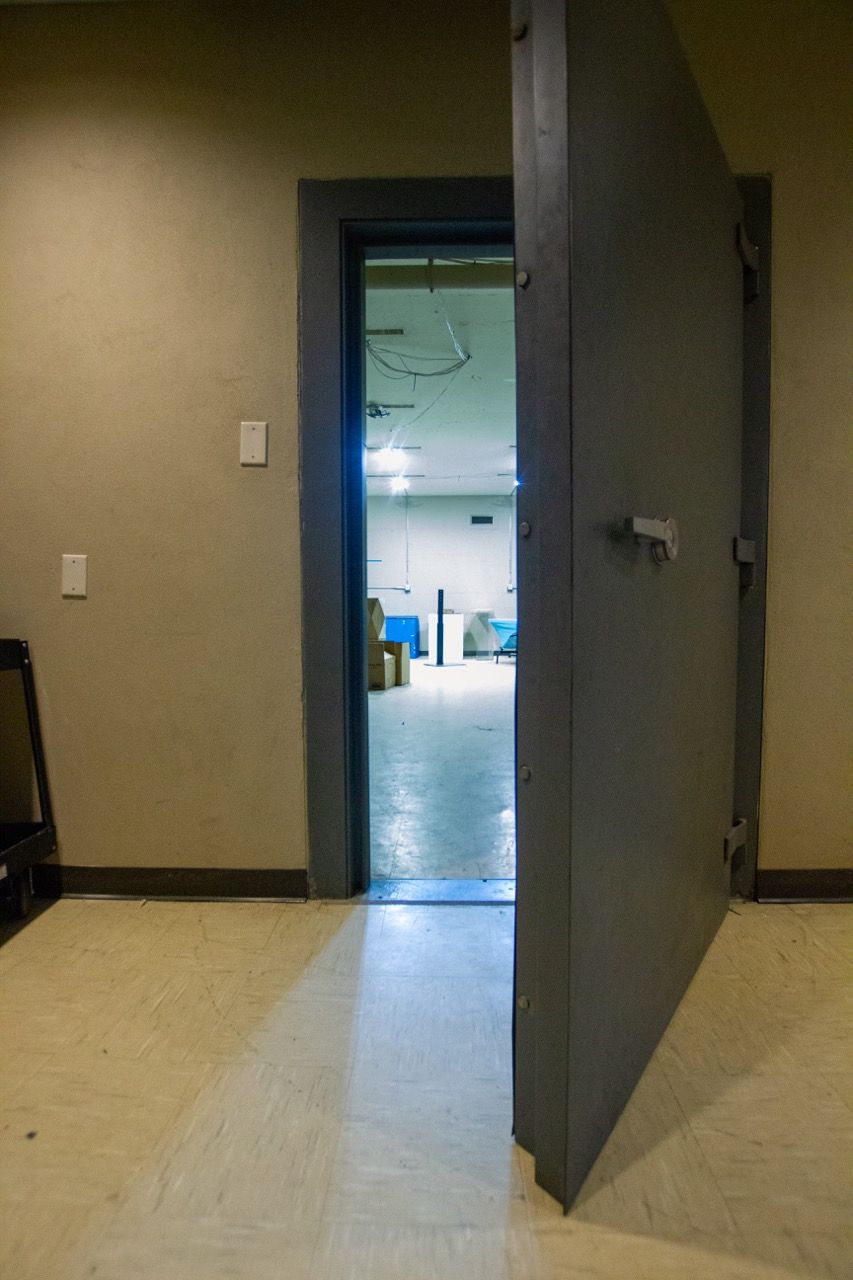
In 1967, on what was then called Proctor Street, the City of Dallas permitted a one-story masonry building with a basement "for microfilm company." That company was Microfilm Center, later known as Microplex and then TAMI, Texas American Microfilm. Film was developed in the old lab, the area that's now Suites 105 and 106. Floor drains carried the developing chemistry down to a tank in the basement where silver was reclaimed, which is why you'll still notice a slight dip in the floor there. Finished film was stored in the basement vault to protect it from fire.
Microfilm Center, Inc.
Microfilm Center, Inc. was a Dallas company led by president Harvey G. "Rusty" Rust (1921-2004), Texas A&M class of '43, who served in the 101st Airborne in World War II. It was incorporated in Texas on December 27, 1967, at 2043 Proctor St, the building's address before the street became Empire Central.
After 13 years in buildings not designed for the work, the company moved into a new plant at 2043 Proctor St. In July 1968, Texas Industrial Expansion put it this way:
"Beginning with one rented camera operated in their living room, the present owners of Microfilm Center now operate nine cameras worth $50,000."
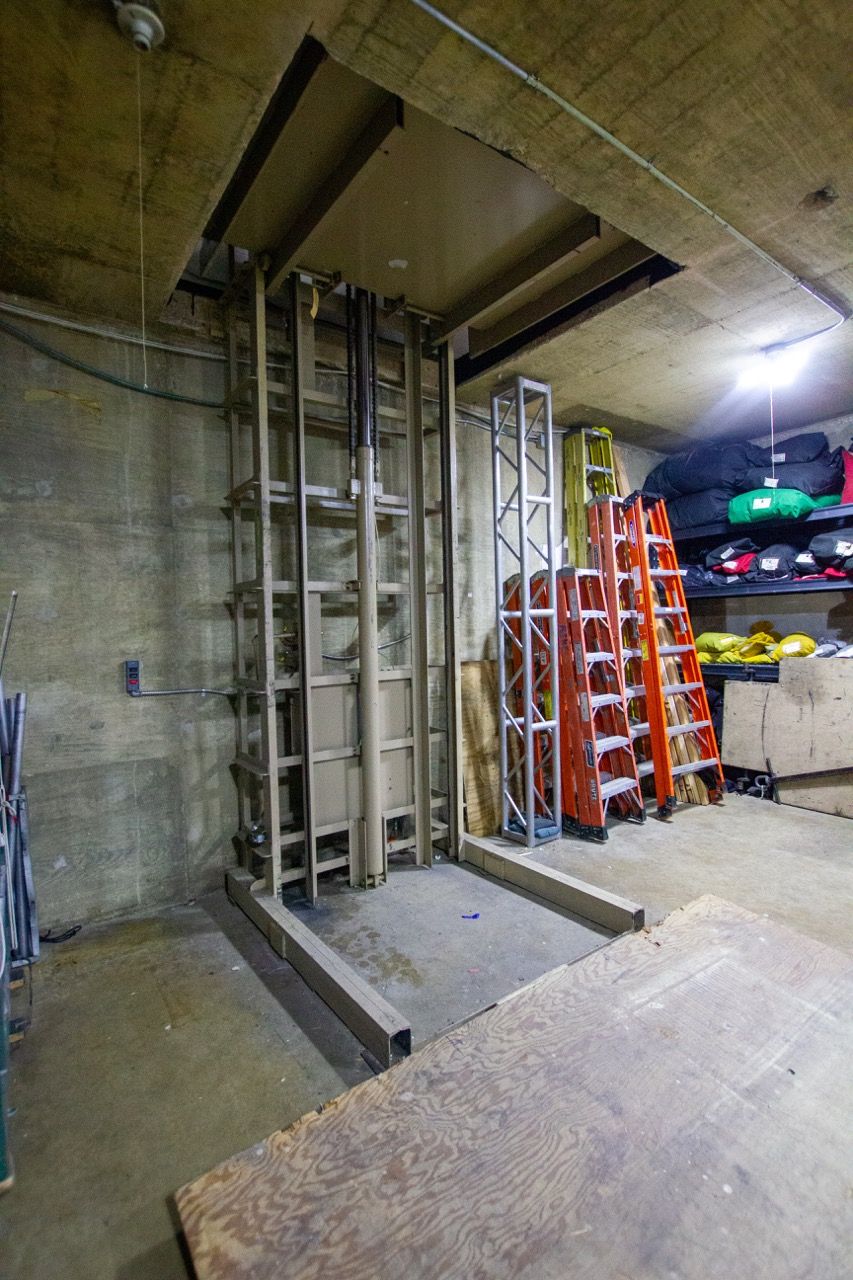
It microfilmed old newspapers and documents and stored the master negatives in underground vaults with controlled temperature and humidity. Retrieval equipment made "instant" reprints in 15 seconds. Reproducing everything stored would take one operator working eight hours a day for 84 years. The film was used by advertisers, novelists, students, researchers, and people searching for birth records. The company also made up to 600 sheets of microfiche a day for hospitals and other institutions.
For decades, small-town newspapers microfilmed by the company carried a "Microfilm Center, Inc., 2043 Proctor St., Dallas" label. The Arizona Silver Belt, in 1977, is one example.
Those underground vaults are likely today's lower level.
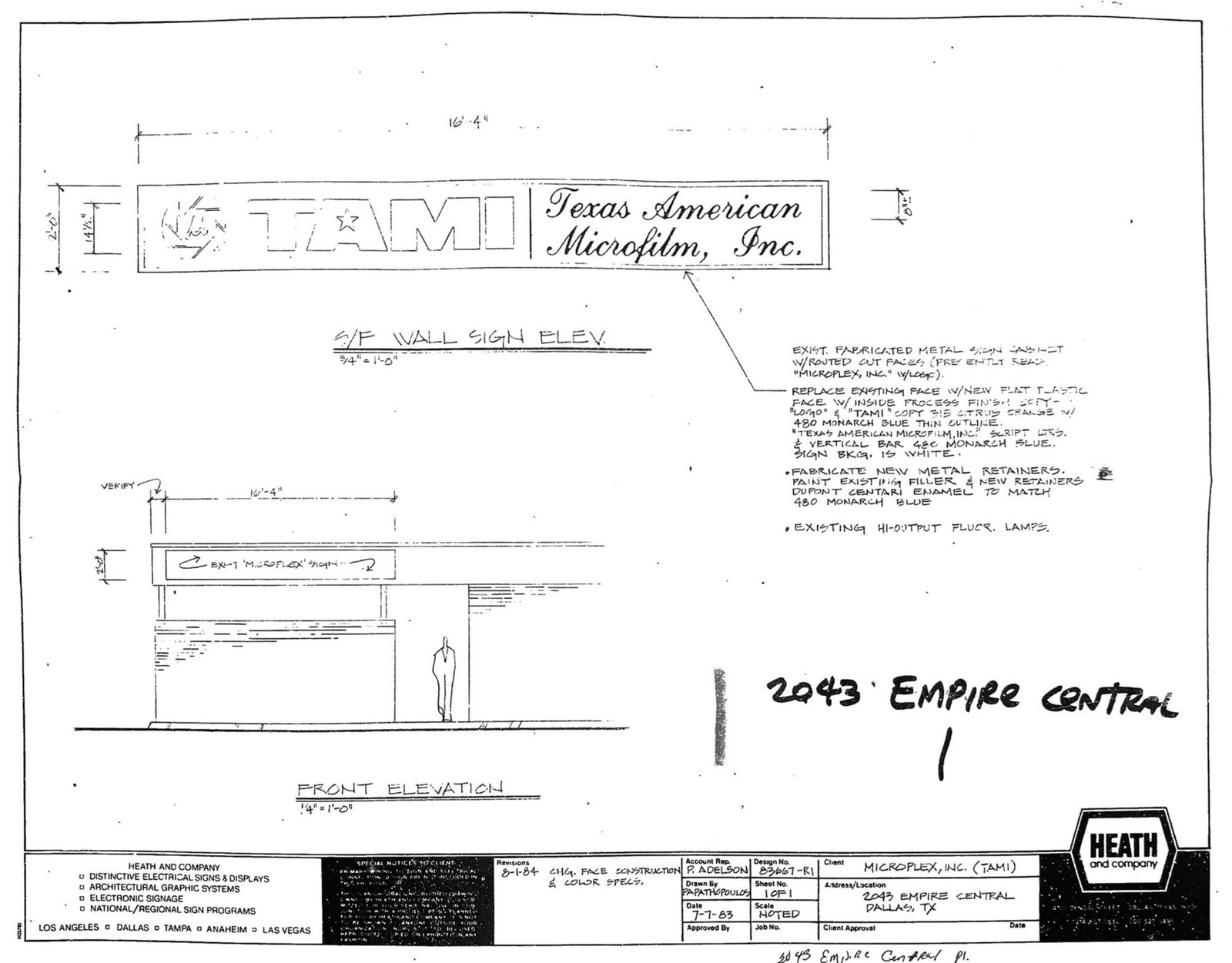
By the early 1980s a second microfilm company, Microplex, Inc., was at 2043 Empire Central. A Heath and Company sign drawing dated July 7, 1983, and revised August 1, 1984, shows the existing "Microplex, Inc." wall sign over the front entry being refaced as "TAMI – Texas American Microfilm, Inc."
In the 1980s, Electro Communication Systems moved in, drawn by the building's proximity to public transportation, and bought it in 1986. Along the way, the front portion of the building was added on to the original. For more than three decades, ECS did communications, audio-visual and document-imaging work here. It was also home to Radio Era Archives, which put vintage radio repair manuals on CD-ROM for collectors everywhere.
In 2019, Vandelay bought the building, making us only the third business to call it home. We run our own business here too, and today it's a home base for small, independent businesses run by friends and neighbors who like doing things their own way.
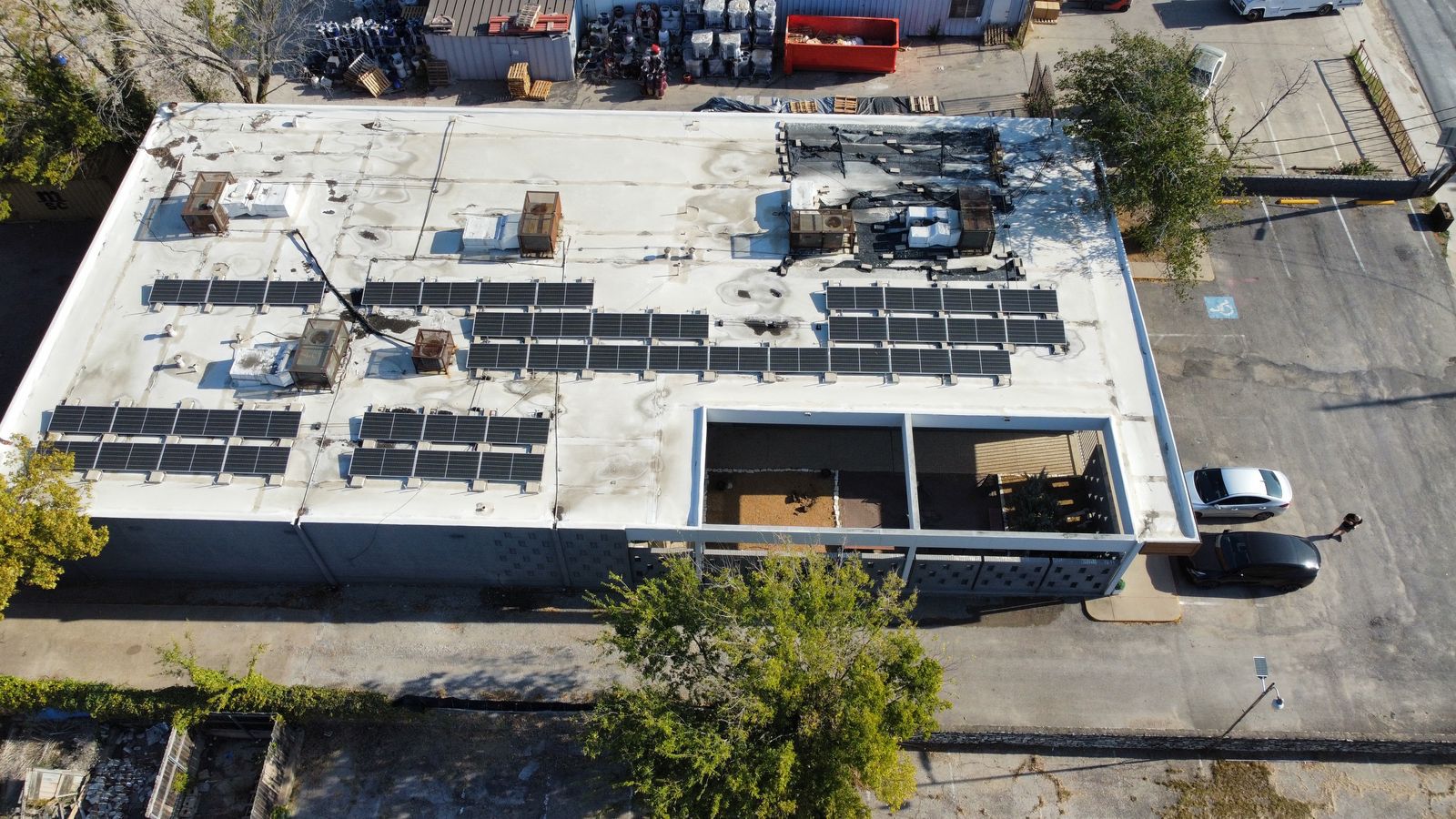
We're proud to look after it for the next chapter, and we'd love for you to be part of it.
Sources
- Texas Industrial Expansion, July 1968, p. 11
- Harvey Rust obituary
- Texas Libraries, Sep-Oct 1960
- Heath and Company sign drawing, 1983 (building city records, owner's files)